
Small savings in vig can add up, but only on bets worth making.
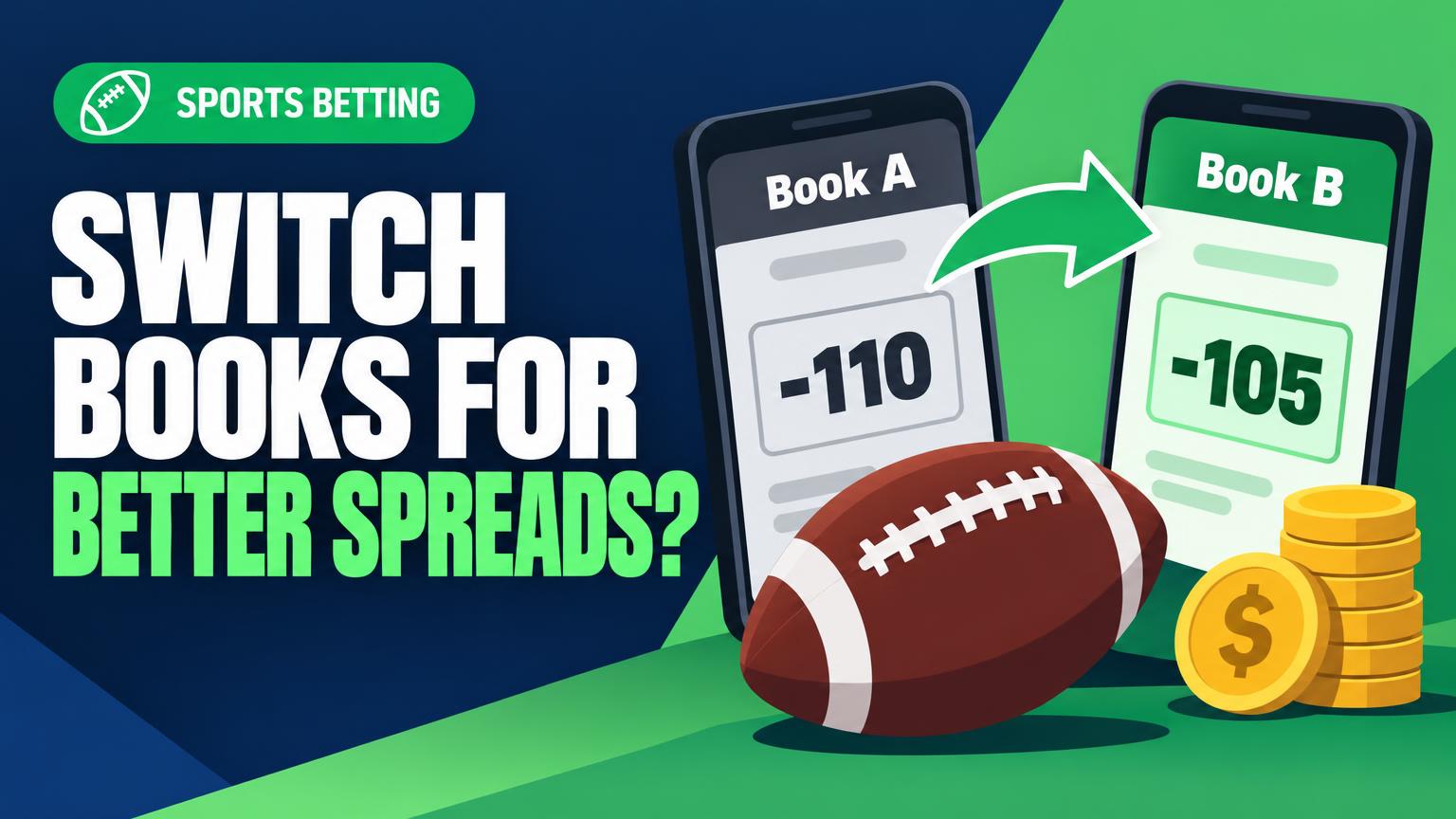
An NFL favorite is -3 (-110) at one sportsbook and -3 (-105) at another. If both offer the same point spread, a bettor risks $105 instead of $110 to win $100. For someone placing spread wagers regularly, that difference can make a second account worthwhile. The point spread betting basics matter here: -2.5 and -3 are not interchangeable prices on the same bet.
Top Sportsbook Bonuses for November 2026

Betfred

HotStreak Sports

Betway Nigeria

Vave Crypto Sportsbook

Spininio Sportsbook

Betjara

BetNeptune

AfricaSports

1bet Sports
Spininio

Ivibet Sports

Golden Panda

TG Casino Sports

BetGoodwin

Quinnbet

Hollywoodbets

MyStake Sports

PowerPlay Sports

Sportsbet.io
Betway Zambia
Betway Ghana

Nicebet Liberia

Nicebet Mozambique

Yellowbet Mozambique

Yellowbet kenya

Fanteam

Starsports

Winner Rwanda

GAL Sports betting Zimbabwe
GAL Sports betting Uganda
GAL Sports betting Tanzania
Yellowbet Guinea
Yellowbet Congo

StarBet Liberia

LuckyBlock Sports

MegaDice Sports

TurboWins Sports

Alfobet

Freshbet

TonyBet
Quinnbet Ireland

Cosmobet Sports

10bet

BetUS

BetNow

Betsuna

Ozoon

MyBookie

Play UK Sports

Jeffbet

Rolletto Sports

Velobet Sports

Bet105

BUSR Sports

Everygame Sports

BettaBet
10bet

SpreadEx

All British Sports

LekkerBets

BetOnline

MobileWins
MobileWins Finland Cashback
MobileWins Finland
MobileWins Canada

BetWhale

BetAnything

Xbet

Bovada

Bookmaker

MegaPari
Before switching, check whether -105 appears routinely or only as a limited promotion. Any offer may have eligible-bet rules, minimum odds, an expiry date, or other restrictions; current sportsbook terms are the source to check. Easier deposits and withdrawals matter, too. Occasional savings may not justify an account that is frustrating to use.
What -105 actually changes
Juice, or vig, is the sportsbook’s margin built into the odds. At -110, a bettor risks $110 to win $100; at -105 on the same team and point spread, the risk falls to $105. The break-even win rate drops from 52.38% to 51.22%. For more context, see why most point spreads carry -110 odds.
The spread must match for that comparison to mean anything. A -105 price at -3.5 is not necessarily better than -110 at -3, especially in NFL betting, where a half-point around a key number can matter more than five cents of juice.
A standing reduced-juice offering is also different from a temporary promotion or a price posted on only a few games. Before switching, check which leagues and bet types qualify, whether both sides of a spread get the lower price, and whether wager limits apply. For a promotion, check the current sportsbook terms for its end date and restrictions.
How much does -105 save?
On the same point spread, moving from -110 to -105 adds $4.33 to the profit from a winning $100 wager. The losing wager still costs $100. That makes the price difference easy to see without assuming anything about which bets will win.
| Odds | Profit on a $100 win | Break-even win rate |
|---|---|---|
| -110 | $90.91 | 52.38% |
| -105 | $95.24 | 51.22% |
The break-even rate is the percentage of wagers that would need to win to cover losses at those odds, assuming equal stakes and no pushes. For a closer look at how the prices work, see the comparison between -110 and -105 odds. These figures describe the cost of the wager, not the likelihood of winning it or a bettor’s expected profit.
The $4.33 edge matters most when the cheaper price is available repeatedly on bets a bettor already intended to make. A -105 line at a different spread is not the same bargain: moving from an NFL favorite at -3 to -3.5, for example, changes which outcomes cover. Compare the spread first, then the odds, before deciding whether another sportsbook is worth using.
When the cheaper odds cost a half-point
A sportsbook offering +2.5 at -105 is not necessarily offering a better bet than another posting +3 at -110. If the team loses by exactly three, +2.5 loses while +3 pushes and returns the stake. The five-cent price difference only helps on outcomes where both bets win; it does not make up for a lost wager on that three-point margin.
That distinction matters in NFL betting, where three is a common final margin. A half-point can also matter around other common margins, such as seven. It is worth checking the effect of a line move on the odds before treating a reduced-juice listing as a discount.
For a useful comparison, check both sportsbooks at roughly the same moment and match the game, side, point spread and wager amount. Then compare the odds. A -105 price on the same +3 spread is cheaper than -110; -105 on +2.5 is a different wager. Also confirm that the displayed line is available at the listed price when the bet slip opens—odds can change before a wager is placed.
If +3 has disappeared everywhere, +2.5 at -105 may still be worth considering on its own merits. It just should not be counted as a saving against a line that can no longer be bet.
Count the prices that matter
A cheaper spread matters only when it appears on a wager that already makes sense. If a bettor would pass at -110 because the matchup offers no value, seeing -105 is not automatically a reason to bet. The relevant question is how often the new sportsbook offers a matching point spread at a lower price on games that were already under consideration.
A simple log can make that clear. For each potential wager, record:
- The game, side, point spread and time the lines were checked
- The odds at each sportsbook, including any eligibility restrictions
- The intended stake and the payout difference at those prices
- Whether the wager met the bettor’s usual criteria before comparing juice
Check the payout at standard spread prices alongside the reduced-juice offer, using the same stake and point spread. This shows what the price difference is worth on actual opportunities, not what it might earn across a hypothetical season.
An occasional spread bettor may find too few qualifying wagers to justify another account. Someone placing eligible spread bets regularly may value the recurring price improvement more—provided the lines remain competitive and the sportsbook is practical to use.
Check the book, not just the advertised juice
-
Legal access and usable lines
A second sportsbook must be licensed where the bettor is located and consistently post the games and point spreads they want to bet. An occasional -105 listing has little value if the usual line is less competitive.
Look forLegal access and competitive spreads on regularly bet games.Watch out forA discount that rarely appears on relevant lines. -
Prices across the actual bet slip
Check the sports and markets that make up most wagers, including over/unders, moneylines, props or parlays. Reduced juice on selected spreads does not mean the same pricing applies elsewhere.
Look forRecurring value on the markets used most.Watch out forTreating a spread offer as an account-wide discount. -
Limits and account restrictions
A favorable price matters only up to the amount the book will accept. Check minimum and maximum wagers, market-specific limits and any eligibility rules before counting on a reduced-juice offer.
Look forLimits that fit normal stake sizes.Watch out forSavings calculated on wagers the book will not accept. -
Funding, withdrawals and app reliability
Review available deposit methods, withdrawal options and fees, then try the app while lines are moving. A hard-to-navigate bet slip or slow account funding can erase the practical advantage of a slightly cheaper price.
Look forConvenient banking and an app that makes line checks easy.Watch out forExtra friction for a small, infrequent saving.
If reduced juice is promotional, confirm eligible bets, qualifying requirements, minimum odds, expiry dates and restrictions with the sportsbook. Those terms can change; an advertised spread price should not be treated as a standing rate.
Which account fits the bet?
A lower-vig sportsbook can be a useful second account without becoming the only place to bet. The right account depends on the line available when a wager is ready to place.
| Account type | Likely use | What can change the choice |
|---|---|---|
| Consistently lower-vig spread book | Regular spread bets when the point spread matches elsewhere | A cheaper price matters less if the desired spread or stake is unavailable. |
| Conventional book | Line shopping across spreads, totals and other markets | It may occasionally post a better price—or a more favorable point spread—than the reduced-juice book. |
| Promotion-dependent book | Bets that already make sense and qualify for an offer | The value depends on current terms, not the headline promotion. |
Keeping the existing account gives a bettor another line to compare. A conventional book offering +3 at -110 may be more appealing than a reduced-juice book offering +2.5 at -105; on a different game, the lower-vig book may have the better price on an identical spread. Moving the entire bankroll removes that flexibility and may not be necessary to get value from the new account.
For a promotion-dependent book, check eligible bets, minimum odds, qualifying requirements, expiry dates and restrictions before counting an offer as part of the price. Account balances should also remain manageable: funds spread across too many books can make routine betting and withdrawals less convenient.
Treat promotional juice as temporary
A sportsbook advertising -105 spreads may offer that price only during a promotion, rather than as its regular line. That can still save money on a qualifying wager, but it is not a reason to value the account as though -105 will be available every week.
Before moving money, check the current offer terms for:
- Eligibility: Is the offer limited to new customers, certain states, or bettors who opt in?
- Eligible wagers: Does it cover the intended sport and point spread? Is there a minimum odds requirement?
- Timing and limits: When does it expire, and is there a maximum qualifying stake?
- Restrictions: Are certain markets or bet types excluded?
Compare the promotional odds with another book’s price on the same spread. Once the offer ends, compare ordinary prices again. A short-lived discount is useful when it fits an existing bet; repeatable pricing matters more when deciding whether to keep using the account.
Promotional rules can change. Confirm the current terms in the sportsbook app, including any opt-in step, before counting on reduced juice.
A quick routine for shopping a spread
-
Check which books are usable
Confirm that each sportsbook is legal in the bettor’s location, the account is ready to use, and the intended market is available. Check any reduced-juice eligibility rules before counting on the advertised price.
-
Compare the same bet
Close to placing the wager, compare the same game, point spread, side, and odds across eligible books. A cheaper price on a different spread is not a direct saving.
-
Check the bet slip
Before submitting, confirm the spread, odds, stake, potential payout, and any applicable limits. Lines can move between browsing and checkout.
-
Record the price taken
Log the sportsbook, spread, odds, and stake after the wager is accepted. This makes later comparisons about actual bets rather than remembered prices.
Funding another account and withdrawing from it can take time or involve restrictions. If moving money is cumbersome, a small price improvement may not justify the extra account management. Cheaper juice is a reason to compare prices, not to increase the planned stake or stretch the bankroll.
A second sportsbook account is worth considering when it is legal in the bettor’s state, easy to use, and repeatedly offers better odds on the same point spread. The savings should be large enough across normal wagers to justify another balance, another app, and any banking friction. There is no need to move an entire bankroll just to access a lower price.
Skip the extra account if the cheaper juice rarely appears on spreads worth betting, comes with a less favorable line, or is too inconvenient to use before the odds move. Checking prices at an existing sportsbook may be enough. Lower vig trims the cost of a wager; it does not make a losing pick a winner or justify larger stakes.
Top Sportsbook Bonuses for November 2026
Betfred
HotStreak Sports
Betway Nigeria
Vave Crypto Sportsbook
Spininio Sportsbook
Betjara
BetNeptune
AfricaSports
1bet Sports
Spininio
Ivibet Sports
Golden Panda
TG Casino Sports
BetGoodwin
Quinnbet
Hollywoodbets
MyStake Sports
PowerPlay Sports
Sportsbet.io
Betway Zambia
Betway Ghana
Nicebet Liberia
Nicebet Mozambique
Yellowbet Mozambique
Yellowbet kenya
Fanteam
Starsports
Winner Rwanda
GAL Sports betting Zimbabwe
GAL Sports betting Uganda
GAL Sports betting Tanzania
Yellowbet Guinea
Yellowbet Congo
StarBet Liberia
LuckyBlock Sports
MegaDice Sports
TurboWins Sports
Alfobet
Freshbet
TonyBet
Quinnbet Ireland
Cosmobet Sports
10bet
BetUS
BetNow
Betsuna
Ozoon
MyBookie
Play UK Sports
Jeffbet
Rolletto Sports
Velobet Sports
Bet105
BUSR Sports
Everygame Sports
BettaBet
10bet
SpreadEx
All British Sports
LekkerBets
BetOnline
MobileWins
MobileWins Finland Cashback
MobileWins Finland
MobileWins Canada
BetWhale
BetAnything
Xbet
Bovada
Bookmaker
