
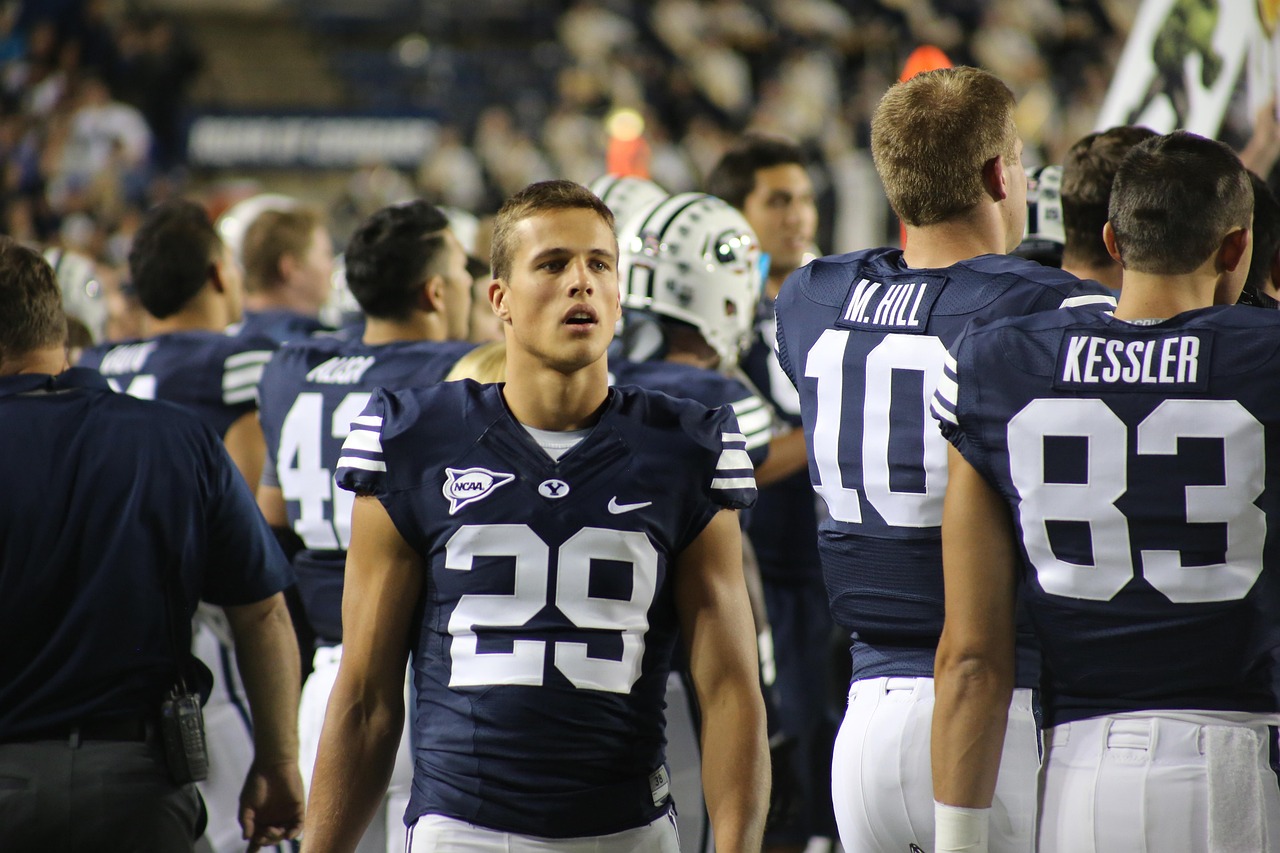
A familiar rule of thumb can hide what makes a road game difficult.
Two teams look evenly matched on a neutral field, yet the home team opens as a four-point favorite. It is tempting to compare that spread with the familiar three-point home-field shortcut and call the line too high. But the shortcut cannot capture every college football trip.
Top Sportsbook Bonuses for October 2026

BetUS

BetNow

MyBookie

Bet105

BUSR Sports

Everygame Sports

BetOnline

BetWhale

BetAnything

Xbet

Bovada

Bookmaker
A rivalry crowd may make communication harder for the visiting offense. A cross-country trip can add travel demands, while an ordinary conference game between nearby schools may have little of either. Home field is a matchup factor, not a fixed adjustment. The betting line can also reflect injuries, rest, and how the teams match up, so the full point spread should not be credited to the stadium. Before taking the road team, a bettor needs a reason the sportsbook has priced those conditions incorrectly—not just a disagreement with a three-point rule.
What home-field advantage means in a point spread
Home-field advantage is the portion of a projected point spread attributed to where the game is played, separate from the teams’ underlying strength. If a team would be favored by 7 points at a neutral site, assigning it a 3-point home edge would make its projected spread 10 points at home. That 3-point adjustment is an estimate, not a fixed college football rule.
A posted sportsbook line is more than a neutral-site rating plus home field. It can reflect injuries, quarterback availability, rest, weather, matchup concerns and betting-market action. Two games at the same stadium may therefore carry very different spreads without the venue itself having changed.
Winning at home is not the same as covering. A home team favored by 10 that wins 24–17 still wins the game but fails to cover the spread. A bettor evaluating home field needs to ask whether the location edge is underpriced or overpriced in the line, not simply whether the home team is likely to win. Even a sound estimate can lose on one Saturday.
Why the setting changes the matchup
A loud crowd can force a visiting offense to use silent counts and hand signals, especially on third down. That may disrupt timing or contribute to a procedure penalty. But a packed stadium is not automatically worth extra points: some road teams handle noise well, and the home offense still has to execute.
Familiarity matters in quieter ways. The home team follows its usual preparation routine and knows the field’s sightlines and surface. If rain leaves natural grass soft, footing could affect a speed-based offense more than a team built around short runs. The useful question is which team’s style is affected, not how famous the venue is.
The same test applies when accounting for the game-day weather forecast. Wind can limit deep passing for both teams; it helps the home side only if the matchup makes the visitor more vulnerable to that change. Rain or cold may also affect players differently depending on their roles and preparation. Check conditions close to kickoff rather than assuming a typical November forecast will hold.
Stadium size and reputation are clues, not point values. Before adjusting a projected spread, consider how the specific matchup responds to noise, footing, and weather—and whether the sportsbook’s betting line already reflects those factors.
Travel and kickoff times change the equation
A nearby conference trip might mean a short bus ride and a familiar kickoff routine. A cross-country game can involve a flight, a time-zone change, and less time for the visiting team to settle in. Both are road games, but they do not ask the same things of the visitor.
The schedule matters as much as the mileage. A West Coast team playing at noon Eastern faces a 9 a.m. start on its home clock if it has not adjusted. A late kickoff across multiple time zones can pose a different challenge. Neither scenario automatically means a poor performance; arrival day and preparation time matter too.
Before assigning extra weight to travel, check:
- How many time zones the visitor crosses and when the game starts.
- Whether either team had a bye or an unusually short preparation window.
- Whether this is a one-off trip or part of a longer road stretch.
The sportsbook’s point spread may already reflect an obvious travel disadvantage. The useful question is whether the matchup presents a cost the betting line has underpriced, not whether the flight looks long on a map.
Why the opponent changes the home edge
The same stadium can pose different problems from one Saturday to the next. A conference opponent that visits regularly may know the locker room routine, sight lines and crowd patterns. A rivalry game can raise the noise and stakes, but familiarity may also help the visitor handle both.
Who is taking the snaps matters as much as where. A veteran quarterback and offensive line may have practiced silent counts and hand signals together for years. A less experienced group may struggle to communicate protection changes when the crowd gets loud. That difference can show up in false starts or missed assignments without making the stadium itself more powerful.
Playing style changes the exposure, too. An offense that relies on frequent audibles and long pre-snap reads gives crowd noise more chances to interfere than one that gets the call in quickly and runs a simpler plan. Matchup details like these belong alongside the point spread, not in place of it.
A blowout at home is not proof of a huge home-field edge: team strength, injuries and turnovers may have driven the margin. Raw home-road records have the same problem, especially when the quality of opponents differs.
Putting a number on this matchup
-
Start on a neutral field
Estimate the gap between the teams before assigning either a home edge. Recent performance, injuries and opponent quality belong in that baseline; the broader process for analyzing college football bets helps keep a team’s reputation from doing all the work.
-
Assess the venue
Consider crowd proximity, expected attendance and whether the visiting offense relies on audible calls. A loud stadium matters more when communication is likely to be tested.
-
Account for the trip
Check distance, time zones and kickoff time alongside the visitor’s schedule. A short conference trip may warrant less adjustment than a cross-country trip with an early local start.
-
Adjust for this week’s conditions
Weather, surface and available personnel can change which team benefits from the setting. A backup quarterback facing crowd noise may matter more than the stadium’s usual reputation.
-
Check the estimate against comparable games
Look across seasons for matchups with similar opponent quality and travel demands, then compare closing point spreads—not just final scores. If the neutral-field favorite projects by four and a two-point home adjustment makes the estimate six, a sportsbook line of seven calls for another look, not an automatic bet.
Closing spreads already reflect team strength, injuries and market expectations, so they do not isolate home field on their own. Treat a game-specific adjustment as a range, especially when comparable matchups are scarce; a one-point difference can disappear with a reasonable change in assumptions.
When the estimate and sportsbook spread disagree
Hypothetical: On a neutral field, the home team would be a two-point favorite. Adding a three-point home-field adjustment makes the estimated spread home -5. If a sportsbook posts home -7, the two-point gap is worth investigating—not automatically betting.
Start with what might be missing from the estimate. Did an injury report change the expected lineup? Does the visitor’s offense handle crowd noise well, or is its quarterback making a first road start? Has the line moved from -5 to -7 since opening, and did that move follow identifiable news? Those questions can reveal whether the original three-point adjustment, the neutral-field rating, or both need revisiting.
The posted number also comes with a price. At home -7 and away +7, the estimated -5 suggests looking at the visitor, but the bettor still needs a reason to believe away +7 at the offered odds is worth the wager. Paying standard -110 juice requires winning more than half of bets that have a decision; a model’s two-point disagreement does not, by itself, establish that probability.
Check other sportsbooks before placing a bet. An available +7 at -115 and +6.5 at -110 present different trade-offs, especially around a common football margin like seven. If the gap survives updated team news, matchup review, and a comparison of lines and prices, it may support a bet. If not, passing preserves the bankroll for a clearer spot.
When a neutral site favors one team
A neutral-site label means neither team is playing in its home stadium. It does not mean both teams face the same trip or bring the same crowd. A bowl played near one campus may give that team easier travel and more familiar surroundings, but the usual home-field adjustment may still overstate the edge.
Check what each team actually gains before changing a point-spread estimate:
- Travel: Compare distance, time zones, arrival schedules, and whether either team avoids a disruptive trip.
- Crowd: Ticket access and likely turnout matter more than a map. A nearby fan base does not automatically fill the stadium.
- Familiarity: Consider prior games at the venue, surface, and routine without assuming a visiting team is uncomfortable.
Recurring rivalry games deserve the same scrutiny. Both programs may know the stadium and plan around the trip, even if one has the shorter drive. Those advantages hidden within neutral-site matchups are worth comparing with the sportsbook spread, not treating as an automatic home game.
- Start Neutral Rate the teams on a neutral field before adding any venue adjustment.
- Check the Trip Travel and kickoff time matter most when they create a specific preparation or fatigue concern.
- Test the Matchup Weather and personnel changes matter through the matchup, not as automatic points for the home team.
- Mind the Price Compare the estimated spread with the current line and odds; a small gap may not survive the vig.
Before placing a wager, put a number on the matchup: start with neutral-field strength, then adjust for the venue, travel, weather and available personnel. Avoid adding separate bonuses for effects that overlap. A loud crowd and a visitor’s communication trouble, for example, may describe the same disadvantage.
Compare that game-specific estimate with the sportsbook’s current point spread and price, not just the team favored. The matchups worth examining this week are the ones where a meaningful difference remains after checking injury news and line movement. If the evidence for an adjustment is thin—or the available odds erase the edge—passing is a sound decision.
Top Sportsbook Bonuses for October 2026
BetUS
BetNow
MyBookie
Bet105
BUSR Sports
Everygame Sports
BetOnline
BetWhale
BetAnything
Xbet
Bovada
