
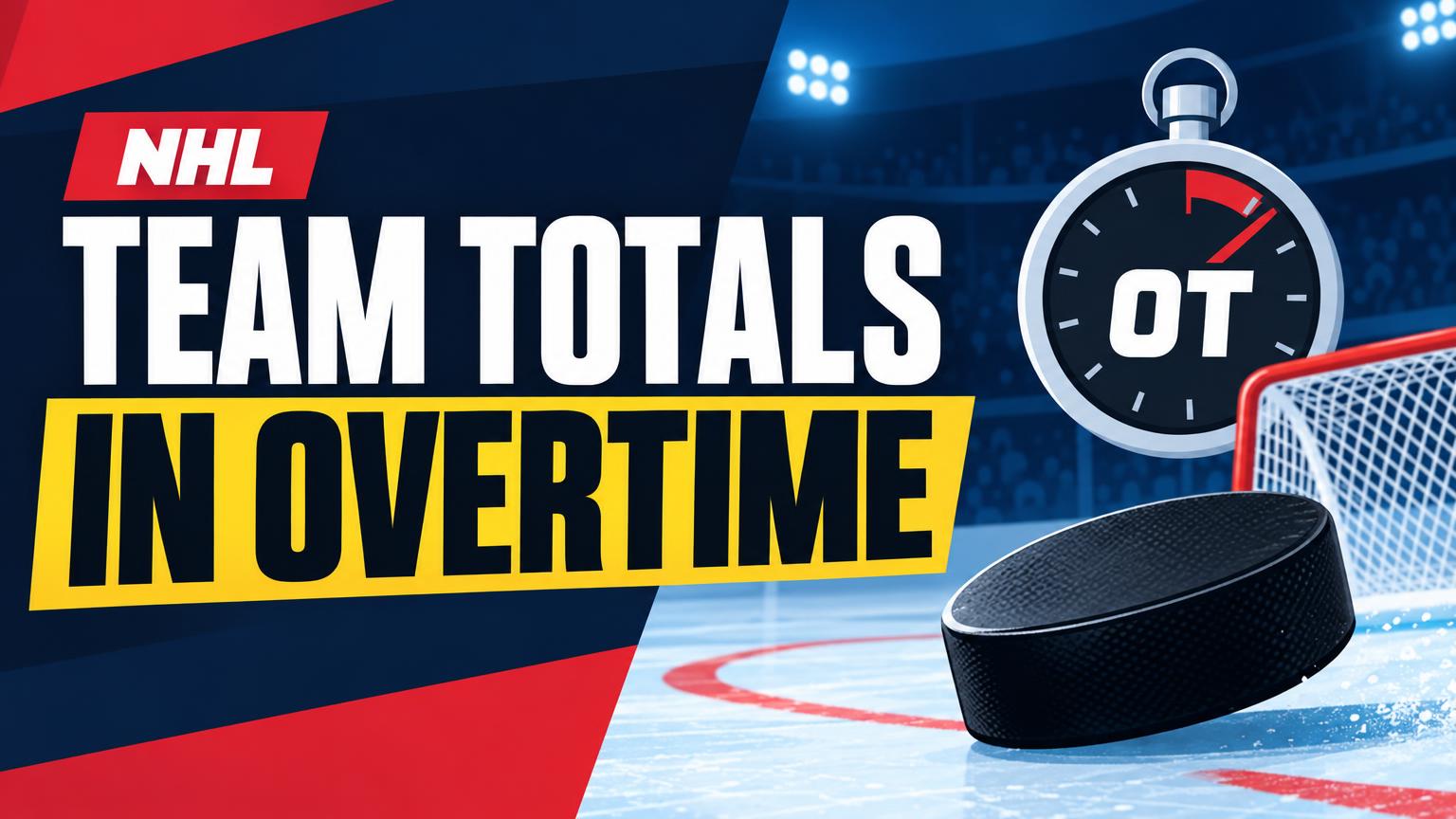
A tied game does not necessarily settle a team-total bet.
A bettor holding a team over 2.5 goals sees a 2–2 score at the end of regulation. The wager may still be live: if that team scores in overtime, it finishes with three goals and the over wins under standard overtime-inclusive rules.
Top Sportsbook Bonuses for November 2026

Betfred

HotStreak Sports

Betway Nigeria

Vave Crypto Sportsbook

Spininio Sportsbook
Betjara

BetNeptune

AfricaSports

1bet Sports
Spininio

Ivibet Sports

Golden Panda

TG Casino Sports

BetGoodwin

Quinnbet

Hollywoodbets

MyStake Sports

PowerPlay Sports

Sportsbet.io
Betway Zambia
Betway Ghana

Nicebet Liberia

Nicebet Mozambique

Yellowbet Mozambique

Yellowbet kenya

Fanteam

Starsports

Winner Rwanda

GAL Sports betting Zimbabwe
GAL Sports betting Uganda
GAL Sports betting Tanzania
Yellowbet Guinea
Yellowbet Congo

StarBet Liberia

LuckyBlock Sports

MegaDice Sports

TurboWins Sports

Alfobet

Freshbet

TonyBet
Quinnbet Ireland

Cosmobet Sports

10bet

BetUS

BetNow

Betsuna

Ozoon

MyBookie

Play UK Sports

Jeffbet

Rolletto Sports

Velobet Sports

Bet105

BUSR Sports

Everygame Sports

BettaBet
10bet

SpreadEx

All British Sports

LekkerBets

BetOnline

MobileWins
MobileWins Finland Cashback
MobileWins Finland
MobileWins Canada

BetWhale

BetAnything

Xbet

Bovada

Bookmaker

MegaPari
A shootout is the catch. If overtime ends scoreless, the NHL’s displayed final score may read 3–2 after the shootout winner is added. That extra goal is not necessarily counted toward a sportsbook’s team total. Settlement depends on the book’s rules for that market, so the final score alone may not explain the result. Check whether the betting line includes overtime, shootouts, or regulation only before placing the wager.
What an NHL team total covers
An NHL team total is an over/under on the goals scored by one named team. It is separate from the game total, which counts both teams’ goals, and the moneyline, which depends on who wins. For a broader look at those markets, see the beginner’s guide to NHL betting.
Suppose the Bruins’ team total is over 2.5 goals. The over wins if Boston scores at least three goals within the wager’s stated time frame; two or fewer goals loses. Boston could lose 4–3 and still clear its team total. The opposing team’s goals do not change that calculation.
The time frame matters when a game goes beyond regulation. A regulation-only team total is graded on the first 60 minutes, while a market that includes overtime may count an overtime goal. Check the sportsbook’s market label and house rules before placing the wager, particularly for how it handles shootouts.
What an overtime goal does to a team total
At 2–2 after regulation, a full-game team total is not settled just because the third period has ended. If one team scores in overtime, the game ends 3–2: the winner has three goals, while the loser stays at two. That single goal can decide a team-total wager even though the game winner may already be clear from the live odds.
For example, suppose both teams have a full-game team total of 2.5. An overtime goal puts the scoring team over 2.5 and leaves its opponent under 2.5. A bet on the winner to go over 3.5 would still lose; the overtime goal changes its total to three, not four. The number on the betting line matters as much as the fact that overtime occurred.
In the regular season, overtime is a five-minute sudden-death period: the first goal ends the game. If neither team scores, the game goes to a shootout, where settlement details can depend on the sportsbook’s rules. For a closer look at that distinction, see how overtime counts toward full-game totals.
In the playoffs, there is no shootout. Teams play sudden-death overtime periods until someone scores, so the deciding goal is an on-ice goal added to the scoring team’s total. Before placing a wager, check that the market says full game rather than regulation only.
How shootouts affect team totals
A shootout creates a wrinkle that overtime does not. If a game is tied 2–2 after overtime, the NHL records a 3–2 final for the shootout winner. That extra goal determines the official score, but the shootout attempts are not ordinary goals scored during play.
For a team total over 2.5 on the winning team, the difference matters. If the sportsbook grades the wager using the official final score, the winner has three goals and the over wins. If its team-total rules exclude the shootout adjustment, that team remains at two goals for betting purposes and the over loses. The losing team stays at two either way.
The game’s displayed final score is therefore not enough to settle the question. Check the house rules for NHL team totals, including whether the bet covers regulation only or includes overtime and shootouts. Rules for the game over/under or moneyline may not apply to this separate market.
Before placing a team-total wager that could land near the line, look for the sportsbook’s shootout settlement rule. If it is unclear, ask the sportsbook how a 2–2 game ending in a shootout would grade.
Over 2.5 vs. over 3.0: the third goal
For a full-game team total, three counted goals win an over 2.5 wager and push an over 3.0 wager. The difference matters when a team starts overtime tied 2–2—or wins a shootout after regulation ends 2–2.
| What happens | Counted team goals | Over 2.5 | Over 3.0 |
|---|---|---|---|
| Team scores its third goal in regulation and finishes with three | 3 | Win | Push |
| Team scores the winning goal in overtime after a 2–2 tie | 3 | Win | Push |
| Team loses in overtime after a 2–2 tie | 2 | Loss | Loss |
| Team wins a shootout; house rules count the added goal | 3 | Win | Push |
| Team wins a shootout; house rules exclude the added goal | 2 | Loss | Loss |
| Team loses a shootout after a 2–2 tie; under either of those rules | 2 | Loss | Loss |
The overtime loser stays on two goals: the opponent’s winner does not add to its team total. In a shootout, the winner’s over 2.5 and over 3.0 outcomes depend on whether the sportsbook counts the added goal. The shootout loser remains at two under either rule. Check the sportsbook’s team-total settlement rules before placing the wager, particularly when the line sits at 2.5 or 3.0.
Check the time frame on the team total
Two bets on the same team’s over 2.5 goals can settle differently if one covers the full game and the other stops after 60 minutes. The time-frame label matters as much as the number.
- Full game, including overtime: Goals scored in overtime count toward the team total. Shootout treatment depends on the sportsbook’s rules.
- Regulation only or 60 minutes: Only goals scored in the three regulation periods count. An overtime goal cannot turn a losing over into a winner.
- Period-specific: Only goals in the named period count. A third-period team total does not include overtime, even when the game is tied after 60 minutes.
Suppose a team has two goals at the end of regulation and scores in overtime. Its full-game over 2.5 wins, while its regulation-only over 2.5 loses. If neither goal came in the third period, a third-period over 0.5 loses too.
On a betting slip, these markets may appear as “Team Total (Including OT),” “Team Total (Regulation),” “60-Minute Team Total,” or “3rd Period Team Total.” Check the selected market on the slip before placing the wager, not just the team, line, and odds. Sportsbooks vary in their labels and settlement rules, particularly for shootouts.
NHL team totals: overtime and unfinished games
Does overtime count toward an NHL team total?
Often, yes, for a full-game team total. An overtime goal can move a team over its line, while a 60-minute or regulation-only wager excludes overtime. The bet slip and sportsbook rules determine which applies.
Does the shootout-deciding goal count?
Not necessarily. The shootout winner gets an extra goal in the official final score, but sportsbooks may exclude it when grading team totals. The market’s shootout rule matters more than the score displayed after the game.
What happens if a game is suspended before it ends?
A suspended game may be settled later or voided, depending on the sportsbook’s rules and whether play resumes within its required window. The policy can differ between full-game and shorter time-frame markets.
What if a game is postponed before it starts?
A postponement does not always void the wager immediately. Some sportsbooks keep it active if the game begins within a specified period; others void it. The applicable window should appear in the house rules.
A team tied 2–2 late in regulation still has a path to over 2.5 on a full-game team total: it could score before the horn or win in overtime. On a regulation-only wager, that overtime chance disappears. The full-game over may therefore carry a higher line or less favorable odds, so the extra scoring opportunity is not a free edge.
Compare the betting line and price before placing the wager. At -120, an over needs to win more than 54.5% of the time just to overcome the vig; an appealing overtime scenario alone does not establish that likelihood. The exact line matters, too: if a team has two goals, an overtime winner clears over 2.5 but only pushes over 3.0, assuming the goal counts under that market’s rules.
Confirmed starting-goalie information can help assess the matchup, but it cannot predict whether a game will reach overtime—or which team will score if it does.
How lineup scratches affect the price
A late scratch to a top-six forward or power-play quarterback can change how a team generates chances. It does not automatically make the under a good bet. The replacement, revised line combinations, opponent’s defense, and confirmed goalie all matter. So does the threshold: an overtime goal could push a team over 2.5 but leave over 3.0 at a push.
When accounting for scratches in scoring projections, compare the current line and odds with the price available before the news. If a sportsbook has already lowered the team total or increased the juice on the under, the apparent value may be gone. The useful question is not whether the absence hurts scoring; it is whether the offered price fairly reflects that impact.
When a team total settles unexpectedly
-
Read the bet slip
Confirm the team, over/under line, and time frame. A 60-minute team total excludes overtime even if the final score includes it.
-
Check the sportsbook’s market rules
Look for language on overtime, shootouts, pushes, and postponed or suspended games. The market-specific rule matters more than a general hockey rule.
-
Compare the official result
Check whether the decisive goal came in overtime or the shootout. An official score can include an added goal for the shootout winner without settling every team-total market the same way.
-
Contact support with the details
If the grade still appears wrong, provide the wager ID, bet-slip wording, applicable rule, and game result. Ask which rule was used to settle the wager.
For a full-game NHL team total, an overtime goal generally counts. A shootout is different: the added goal in the official final score may or may not count, depending on the sportsbook’s rules. Check the bet slip and market terms before treating an unexpected grade as an error.
Top Sportsbook Bonuses for November 2026
Betfred
HotStreak Sports
Betway Nigeria
Vave Crypto Sportsbook
Spininio Sportsbook
Betjara
BetNeptune
AfricaSports
1bet Sports
Spininio
Ivibet Sports
Golden Panda
TG Casino Sports
BetGoodwin
Quinnbet
Hollywoodbets
MyStake Sports
PowerPlay Sports
Sportsbet.io
Betway Zambia
Betway Ghana
Nicebet Liberia
Nicebet Mozambique
Yellowbet Mozambique
Yellowbet kenya
Fanteam
Starsports
Winner Rwanda
GAL Sports betting Zimbabwe
GAL Sports betting Uganda
GAL Sports betting Tanzania
Yellowbet Guinea
Yellowbet Congo
StarBet Liberia
LuckyBlock Sports
MegaDice Sports
TurboWins Sports
Alfobet
Freshbet
TonyBet
Quinnbet Ireland
Cosmobet Sports
10bet
BetUS
BetNow
Betsuna
Ozoon
MyBookie
Play UK Sports
Jeffbet
Rolletto Sports
Velobet Sports
Bet105
BUSR Sports
Everygame Sports
BettaBet
10bet
SpreadEx
All British Sports
LekkerBets
BetOnline
MobileWins
MobileWins Finland Cashback
MobileWins Finland
MobileWins Canada
BetWhale
BetAnything
Xbet
Bovada
Bookmaker
