
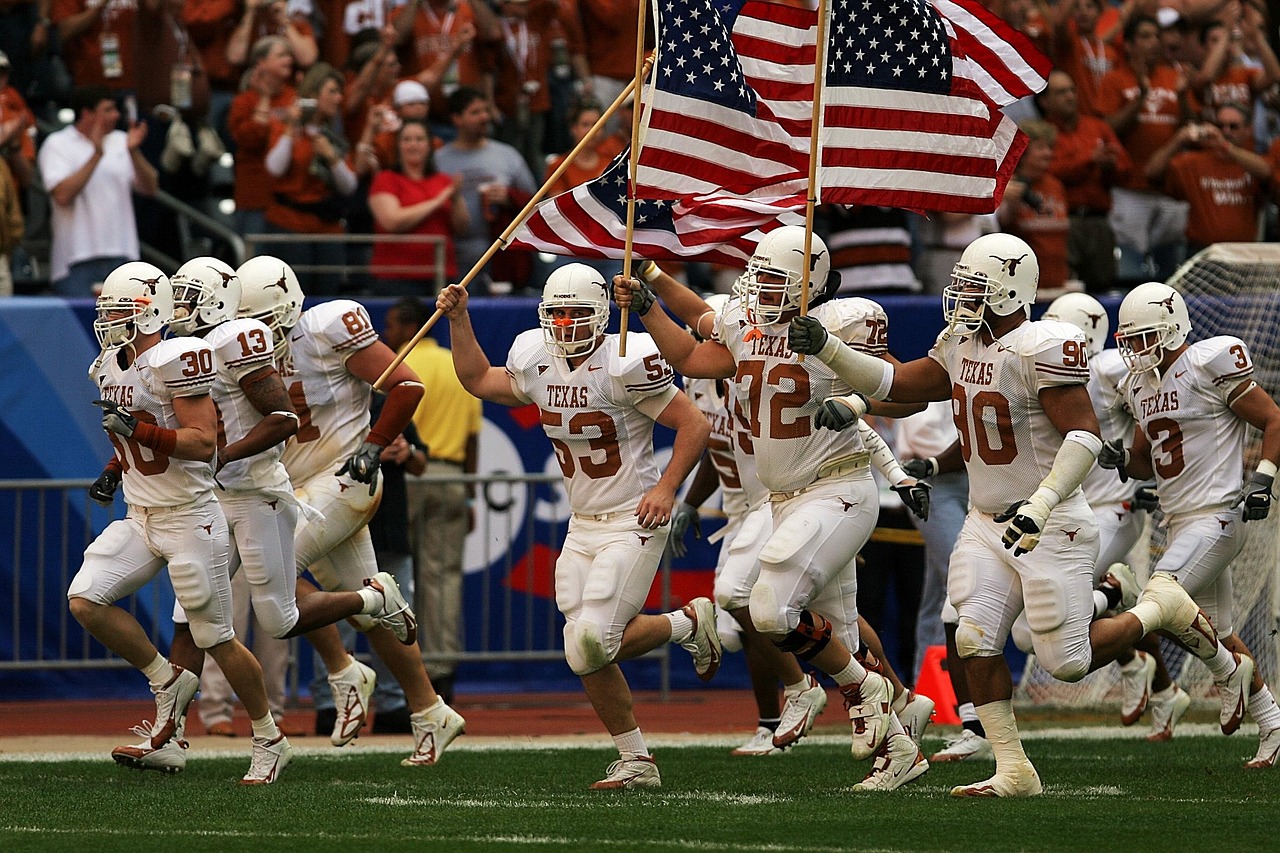
Familiar faces can raise expectations without raising a team’s ceiling.
A team brings back its starting quarterback and most of its offensive line, then opens as a favorite in a game it lost last season. That looks like progress—but returning production measures continuity, not how good that production was. Bringing back an offense that struggled to score may make results more predictable without making the offense better.
Top Sportsbook Bonuses for October 2026

BetGoodwin

Quinnbet

Hollywoodbets Sports

MyStake Sports

Betsuna Sports

Jeffbet Sports

Betfred

Play UK Sports

Rolletto Sports

Velobet Sports

Hot Streak Sports

10bet

Bettabet

All British Sports

Lekkerbets

MobileWins

BetAnything

SpreadEx

BetNeptune

Africa Sports
The betting question is whether experience can turn into improvement beyond what the point spread already assumes. A healthy quarterback, a line with established starters and young contributors who improved late in the season make a stronger case than a high percentage alone. If the sportsbook has already adjusted the line, the roster news may offer little betting value.
What returning production measures
Returning production measures how much of a team’s prior-season output is back on the roster. It is not a count of returning starters. A receiver who caught 60 passes and started only a few games may contribute more retained production than a returning starter who rarely touched the ball. The same distinction applies to defenders who played substantial snaps without a starting designation.
The definition matters because there is no single universal formula. One model might put more weight on returning quarterback passing yards and offensive line snaps; another might emphasize receiving yards, tackles or defensive snaps. A team can therefore rank differently across models even when both use accurate roster information.
Before using the number to assess a point spread, check which statistics are counted, how they are weighted and whether transfers are included. Software for modeling returning production can make comparisons easier, but its output is only as useful as those underlying choices. A high retention figure describes familiar personnel and past contributions; by itself, it does not show how much those players will improve or whether the betting line already accounts for them.
When familiarity improves execution
Returning production becomes more persuasive when the same players are likely to perform the same jobs. An offensive line that keeps its center and guards, for example, may communicate protection calls more smoothly. A defense with returning players in the same roles may handle coverage handoffs with fewer missed assignments. Those gains can show up without a major change in talent.
Health and role stability matter as much as the names on the roster. A returning starter recovering from injury may not be ready to play a full workload. A new coordinator could also change assignments enough that last season’s experience carries less value.
The strongest case for improvement starts with a specific weakness. If a team struggled with protection despite returning most of its line, bettors can examine whether injuries, inexperienced backups or communication errors contributed—and whether those conditions have changed. If the problem was simply that opponents overmatched the line, continuity alone is a weaker argument.
Returning players offer a reason to investigate cleaner execution, not a reason to assume it. The betting question is whether a plausible improvement is larger than the improvement already priced into the point spread.
Where returning production matters most
A team-wide returning-production percentage can hide the position group that will determine whether an offense or defense improves. The useful question is not just how much production returns, but where it returns—and what has to be replaced.
Quarterback continuity usually deserves the closest look. A returning starter who knows the system and has established timing with receivers gives an offense a clearer path to improvement. But a returning quarterback is less reassuring if the offense loses the line that protected him or the targets who made difficult throws easier.
On the offensive line, continuity works as a group. Several linemen with experience playing together may communicate better on blitz pickups and run blocking. A strong overall return rate is less persuasive if both tackles are new, particularly against a schedule with dangerous edge rushers.
At running back and receiver, raw yardage can overstate how hard production is to replace. A team might retain most of its rushing yards while losing its leading receiver—the player defenses had to account for on every passing down. That loss can change how opponents cover the entire offense.
Defense needs the same position-by-position check:
- Defensive line: Returning interior size helps, but losing the primary pass rusher can weaken pressure without changing the unit’s experience much.
- Linebackers: Returning tacklers matter most when they can still handle coverage and run fits in their assigned roles.
- Secondary: Familiarity can help coverage communication, though losing a top corner may force changes across the back end.
Before treating a high return rate as a reason to back a team against the point spread, check the departures at quarterback, tackle, pass rusher and corner. One difficult-to-replace loss can matter more than several returning starters elsewhere.
When returning production misleads
A team can bring back nearly every offensive yard and still bring back an offense that struggled to move the ball. Returning production measures what stayed, not how well it worked. Heavy rushing volume, for example, says little about whether those carries produced first downs or left the offense facing third-and-long.
The same distinction applies on defense. A unit that returns its leading tacklers may have plenty of experience, but high tackle totals can also reflect long drives and too many plays faced. Before treating continuity as a reason to back a team against the point spread, it helps to ask whether the returning players were part of an efficient unit in the first place.
Useful checks include:
- Per-play results: Did the offense consistently gain useful yardage, or did the defense limit it?
- Down-to-down performance: Did production keep drives alive and get stops, rather than arrive in bursts?
- Context: Did strong totals come against weaker opponents or during lopsided games?
Departures can be less damaging than a raw retention figure suggests, too. A team losing several starters may have transfers ready for major roles, younger players who already earned snaps, or backups who showed they could handle the workload. Those replacements still carry uncertainty, but they make a low returning-production ranking a poor shortcut for assuming decline.
For betting purposes, the stronger case is not simply that production returns. It is that a capable unit returns enough of its core to sustain—or plausibly improve—its play, and that the sportsbook’s line has not already priced that in.
Will returning players have the same jobs?
A team can return most of its production without returning the conditions that produced it. Before treating familiar names as a reason to expect improvement, check whether those players are likely to get comparable snaps, assignments and support.
Start with the coaching staff. A returning quarterback may have a new coordinator, different reads or a faster tempo. An offensive line can bring back four starters yet spend the spring learning a new blocking scheme. Continuity is more convincing when the coaches, system and key position groups remain together.
Then look for changes that could shrink or reshape a returning player’s role:
- Transfers: An incoming starter may take snaps from a productive returner, while an outgoing teammate may remove the protection or space that helped create those numbers.
- Depth-chart changes: A receiver moving from the slot to the outside may face different coverage, even if his target share stays similar.
- Availability: Offseason surgery, a suspension or a limited camp can delay the benefit of experience. Current injury information matters more than a player’s appearance on a returning-production list.
For betting purposes, the question is not simply how much production is back. It is how much of it can reasonably carry over to the new season. If roles remain unsettled, a preseason point spread built around apparent continuity deserves a closer look, not an automatic wager.
A better team can win fewer games
A rising win total is not the only sign that returning production paid off. A team can play better and finish with a worse record if its opponents improve or difficult conference games move from home to the road. Close-game results can also swing a record without much change in underlying quality.
Consider a team that goes 7–5, then returns most of its offense. If the next schedule replaces manageable home games with ranked opponents on the road, a 6–6 finish would not, by itself, mean the offense regressed. The useful comparison is how competitive that team was against the opponents it actually faced.
For a preseason read, estimate expected wins from projected point spreads for each game rather than using last year’s record as the baseline. Then check whether the team’s neutral-field rating appears to improve, even if its projected win total does not. That keeps returning talent and schedule strength in the same analysis without confusing them. Sportsbook lines are useful reference points, not proof: they already reflect some roster expectations, and both ratings and schedules can change during the season.
When the roster review disagrees with the odds
A roster review becomes useful for betting when it produces a different estimate from the market—not merely a higher team ranking. Start with a preseason projection of team strength, then adjust for schedule, coaching changes and the other key variables in college football betting. That separates a likely improvement in quality from an expected increase in wins.
For a season-win total, estimate the chance of winning each game and combine those probabilities into a range of possible season outcomes. A projection of 7.2 wins does not, by itself, make over 6.5 a good wager. The relevant question is how often the team reaches seven wins in the projection, compared with the break-even probability at the sportsbook’s odds. At -110, that threshold is about 52.4% before accounting for uncertainty in the projection.
Early point spreads offer another check. If retained offensive-line and quarterback experience supports a stronger rating, compare a projected spread for each opening game with the available line. A one-point disagreement may disappear once home field, opponent changes, injuries and normal preseason uncertainty are considered.
Returning production is most persuasive when specific players have clear roles and the case for better execution shows up in both the season outlook and individual matchups. If the market already prices in that improvement, continuity alone is not an edge.
Preseason projections are estimates. A small difference from the betting line may not overcome the vig or uncertainty about how a roster will perform.
Check the roster before betting the improvement
-
Define the number
Check which statistics count as returning production and how the source handles transfers. A high ranking means less if it omits an important departure.
-
Identify who returns
Look past the team percentage to the quarterback, offensive line, pass rush and secondary. Note whether the returning players are likely to keep meaningful roles.
-
Check last season’s unit quality
Retaining an efficient unit is different from retaining one that struggled. Look for specific problems that experience or better health could plausibly fix.
-
Update the circumstances
Account for coaching changes, scheme fit, injuries and incoming competition before projecting familiar production into the new season.
-
Compare the price
Estimate improvement against the actual schedule, then compare it with the win total and available point spreads. If the edge is too small to cover uncertainty and vig, pass.
When roster and market signals conflict, monitor depth charts and early games rather than forcing a preseason wager.
Returning production is most useful when the right players are back, their roles still fit, and the betting line has not already priced in their improvement. Otherwise, continuity is a reason to keep watching—not a bet by itself.
Top Sportsbook Bonuses for October 2026
BetGoodwin
Quinnbet
Hollywoodbets Sports
MyStake Sports
Betsuna Sports
Jeffbet Sports
Betfred
Play UK Sports
Rolletto Sports
Velobet Sports
Hot Streak Sports
10bet
Bettabet
All British Sports
Lekkerbets
MobileWins
BetAnything
SpreadEx
BetNeptune
